
Understanding the Sanctuary of the Primary Market
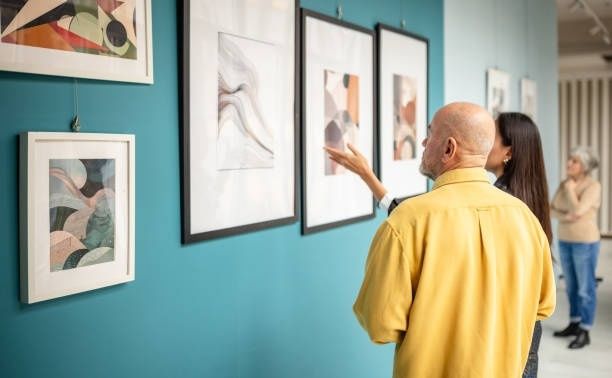
The primary market is where an artist”s public career gathers its first durable shape. It is the point of an artwork”s initial sale, usually from the artist”s studio through a representing gallery, and it is where provenance begins. Before an auction record, resale history, or market consensus exists, the work is encountered through the artist”s intentions, the gallery”s judgment, and the buyer”s own sustained response to its material presence. A painting”s surface, a sculptural form”s balance, or the atmosphere created by a work on paper may matter more at this stage than any established price history.
This quiet beginning differs markedly from the transactional velocity of the secondary market. Auctions can publicly test demand, while later resales generally benefit the current owner rather than the artist. Primary representation, by contrast, is an ongoing act of stewardship. A gallery helps shape exhibitions, documentation, institutional relationships, production decisions, and conversations around the work. For collectors seeking a deeper understanding of that cultural ecosystem, an authoritative overview of art galleries offers useful context. Collecting through the primary market is therefore not merely a decorative acquisition. It is a form of cultural patronage, allowing living artists to continue developing while bringing their ideas into private spaces and wider public discourse.
The Vital Ecosystem Behind the Roster
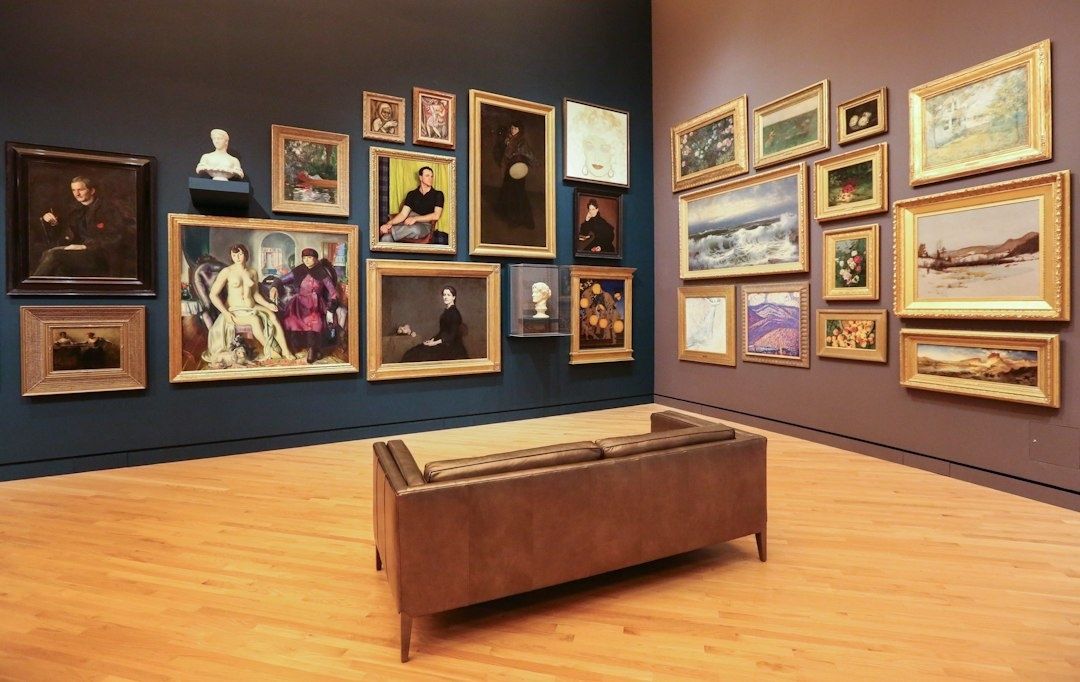
A primary gallery”s roster is not simply a list of names attached to a sales program. It is a working ecosystem in which artists, staff, curators, institutions, collectors, fabricators, shippers, conservators, and writers intersect. The gallery may help finance a new body of work, coordinate a complex installation, arrange photography and cataloguing, secure fair presentations, and introduce an artist to museums or public collections. Much of this labor is invisible to the visitor who encounters a finished exhibition, yet it often determines whether an artist can move from a promising studio practice to a sustainable career.
Representation also requires patience. A gallery may place early works with collectors who understand that an artist”s visual language is still evolving. It may support an ambitious project before there is certainty about its commercial reception, or protect studio time when public demand begins to accelerate. Research on gallery operations consistently describes dealers as cultural intermediaries and practical problem-solvers, rather than as sales agents alone. Their responsibilities can include shipping, installation, communications, production planning, exhibition narratives, and the careful cultivation of institutional visibility.
Pricing is one of the most delicate forms of that stewardship. In the primary market, the artist and gallery generally establish prices according to career stage, medium, scale, complexity, demand, and comparable works. The goal is not simply to charge the highest possible amount, but to create a coherent progression that protects the artist from abrupt volatility. A considered price structure can discourage speculative flipping, give collectors confidence that related works will be treated consistently, and allow the artist”s development to remain legible over time. A useful operational framework, such as discerning art advisory services, can help emerging patrons examine representation agreements, commission structures, exclusivity provisions, and roster dynamics with greater confidence.
- Commercial dealers may facilitate individual transactions across different artists and markets.
- Primary representatives typically invest in an artist”s long-term positioning, documentation, exhibitions, and institutional relationships.
- Career-defining galleries often accept significant risk, helping shape how an artist is understood before broad recognition arrives.
For a collector, the distinction is practical. Buying from a gallery deeply involved in an artist”s trajectory may provide access to studio conversations, future exhibitions, and considered guidance about conservation and placement. It also means entering a relationship in which the collector”s conduct can affect the artist”s market. A work that is rapidly resold may contribute to an unstable price narrative, whereas a thoughtfully held work can become part of a collection”s cultural continuity.
Demystifying Allocations and the Myth of the Secret Waitlist
High-demand works are often described as being controlled by a secret waitlist, but allocation is usually more nuanced than a chronological queue. When a new series attracts more interest than available works, the gallery must decide where each piece can best support the artist”s career and the integrity of the program. A collector who expressed interest first may not automatically receive the largest or most significant work. Placement can depend on the collector”s existing relationship with the gallery, the suitability of the work for the collection, geographic balance, institutional potential, and the likelihood that the work will be cared for over time.
This approach can feel opaque if the buyer sees only the final allocation. Yet a gallery is often balancing several responsibilities at once. It may reserve a work for a museum, place another with a respected public collection, or ensure that an artist”s work reaches different regions without becoming concentrated among a small group of speculative buyers. Collectors who communicate clearly about their interests, display conditions, budget, and collecting horizon make that process easier. A considered conversation about why a particular work matters will generally be more persuasive than a vague request for the most valuable available piece.
| Allocation consideration | Why it matters |
|---|---|
| Long-term stewardship | Galleries seek collectors likely to care for the work and resist immediate resale. |
| Collection fit | The scale, medium, and subject may need to suit the buyer”s space and existing holdings. |
| Relationship history | Consistent engagement with exhibitions and the artist”s development can build trust. |
| Institutional relevance | Some works may be directed toward museums or public collections that broaden visibility. |
| Geographic distribution | Balanced placement can help an artist reach new audiences and avoid market concentration. |
| Financial and logistical readiness | Clear budgets, payment arrangements, shipping plans, and installation conditions reduce risk. |
Top-tier programs may also consider whether a buyer has a pattern of supporting artists beyond the most public names. Attendance at exhibitions is not a requirement for legitimacy, and neither is possession of an impressive roster of previous purchases. What matters more is evidence of thoughtful engagement. A collector who asks about the artist”s progression, understands the work”s material demands, and treats the gallery as a long-term resource is more likely to receive meaningful guidance than one focused solely on scarcity.
Deciphering Editions, Proofs, and New Medium Disclosures
Editioned works require precise reading. A notation such as 27/75 identifies an impression within an edition, but it is not the same as a catalogue reference. An artist”s proof may be marked E.A., or P.A. in Spanish usage; H.C. means hors commerce, indicating a work outside the regular commercial edition; and Roman numerals may identify separately numbered groups whose meaning depends on the artist”s and publisher”s documentation. A Bon à Tirer, or BAT, proof is the approved standard for printing and may include corrections made during the process. Trial and working proofs can preserve earlier states, variations, or technical stages.
These designations do not create a simple hierarchy in which rarity automatically equals greater value. A lower edition number is not inherently superior, and a signature alone does not establish authenticity. The signature, paper, dimensions, medium, printer, publisher, catalogue reference, condition, and provenance should form a coherent record. This is especially important as artists work across photography, digital production, video, installation, generative systems, and hybrid processes. Buyers should ask how files are stored, whether software or hardware dependencies exist, how an edition is limited, and what constitutes an authorized replacement or display copy.
Transparency expectations are also changing beyond the traditional print certificate. The European Commission”s Code of Practice on Transparency of AI-generated Content supports compliance with Article 50 of the EU AI Act, including obligations concerning the marking, detection, and labelling of certain AI-generated content. Those legal obligations apply from 2 August 2026, while adherence to the code itself is voluntary. For collectors, the broader lesson is clear: documentation of creative processes and technological intervention should be treated as part of the artwork”s integrity, not as an optional afterthought.
- Request a complete invoice and certificate. The paperwork should identify the artist, title, date, medium, dimensions, edition or proof designation, and purchase terms.
- Match the work to its documentation. Check inscriptions, catalogue references, paper or substrate, printer, publisher, and any relevant production notes.
- Record condition at purchase. Obtain a condition report, installation guidance, and photographs where appropriate, particularly for fragile works or complex media.
- Clarify provenance and future transfer. Keep correspondence, receipts, certificates, exhibition histories, and details of authorized servicing or upgrades.
For historically significant or technically complicated works, independent advice may be appropriate. A reputable gallery should welcome careful questions rather than treating them as mistrust. Clear records protect the artist, the buyer, future owners, and the cultural history attached to the object.
Fostering Authentic Rapport with Gallerists and Curators
The most productive gallery conversations begin with close looking. Instead of asking only whether a work is available or likely to appreciate, ask how the artist arrived at its medium, what changed between this series and the previous one, or how scale affects the work”s emotional pressure. Questions about pigment, surface, construction, light, sound, or installation can reveal the decisions that give a piece its presence. A thoughtful discussion also helps determine whether a work will live convincingly in a particular room, alongside existing holdings, or within a developing collection.
- Ask about the artist”s current direction, not only their biography.
- Explain the intended setting, scale, light conditions, and display requirements.
- Be candid about budget and timing so recommendations remain realistic.
- Attend previews and exhibitions with curiosity, while respecting periods of intense activity.
- Follow up clearly and courteously, even when a particular work is not acquired.
Studio visits require a similar balance of enthusiasm and restraint. They are opportunities to understand process, not private shopping appointments guaranteed to produce a sale. Avoid pressing for unfinished works, confidential pricing, or special treatment. When an artist shares developmental material, listen carefully and allow the work to remain in formation. Genuine engagement with an artist”s vision can open doors naturally, but the purpose should be understanding rather than strategic access. Over time, a gallery recognizes the collector who returns because the work matters, not merely because a scarce allocation might become available.
Cultivating Your Legacy as a Thoughtful Patron
A collector”s role in the primary market is best understood as reciprocal stewardship. The gallery protects and advances the artist”s practice; the collector provides a sympathetic home, careful care, and a wider circle of attention. This relationship does not require indiscriminate buying or an extravagant budget. It requires consistency, informed curiosity, and a willingness to support work before every question about its future value has been answered. The strongest collections often contain a visible record of sustained attention, with works connected by ideas, materials, places, or evolving conversations rather than by fashion alone.
Before the next gallery dialogue, replace competitive questions with constructive ones. Ask what the artist is trying to make possible, what the work needs in order to be seen properly, and how the purchase supports the larger program. Review the paperwork, consider conservation and installation, and give the relationship time to develop. A meaningful collection is built through repeated acts of attention: returning to exhibitions, keeping records, caring for objects, and allowing works to change the atmosphere of a room and the texture of a life. That is the enduring privilege of the primary market, not simply acquiring art at its beginning, but helping its cultural life continue.