

The Allure of the Molten Surface
Encaustic painting occupies a rare position in the history of art. It is ancient in origin yet unmistakably contemporary in appearance, capable of producing surfaces that feel geological, atmospheric, and almost illuminated from within. The medium is built from heated wax, most commonly beeswax blended with damar resin and dry pigment. Once applied and fused, successive layers create a visual field in which colour, texture, and light remain legible at different depths.
That optical richness is part of the medium’s particular appeal to collectors. Unlike a flat painted film, encaustic can hold ridges, veils, incisions, embedded materials, and translucent passages that change subtly as the viewer moves through a room. Some buyers hesitate because wax sounds fragile, but the concern is usually overstated. Correctly made encaustic works are historically durable, moisture-resistant, and well suited to domestic display when protected from excessive heat, intense sunlight, and careless handling. The result is a tactile form of fine art that rewards close looking without demanding anxious, museum-like vigilance.
Alchemy of Fire and Wax Across Millennia
The word encaustic derives from the ancient Greek enkaustikos, commonly translated as “to burn in” or “to heat.” The name describes the defining action of the process: each layer of wax is warmed so that it bonds with the layer beneath. This is not simply a coating applied to a surface. It is a controlled sequence of heating, painting, fusing, cooling, and sometimes reworking, with the artist using temperature as both tool and instrument.
The medium’s ancient lineage is more than a historical curiosity. The Greco-Roman Fayum mummy portraits, created in Roman Egypt between the first and third centuries CE, demonstrate how remarkably well wax-based painting can endure. Many were painted on wood and attached to mummy wrappings, combining individualized portraiture with Egyptian funerary practice. Their surviving faces retain nuanced modelling, dark hair, luminous skin tones, and carefully observed features after nearly two thousand years. For a concise account of this lineage, collectors can consult Britannica’s history of encaustic painting.
After the decline of encaustic practice following the Roman period, the medium gradually returned to studio culture in the twentieth century. Modern artists were drawn to its ability to support both gestural immediacy and meticulous revision. Jasper Johns helped bring pigmented wax into prominent contemporary practice from the early 1950s, while later artists expanded encaustic into abstraction, mixed media, installation, sculpture, and highly textured panel painting. Electric heating tools and commercially prepared medium made the process more accessible, but the essential artistic encounter remains ancient: heat transforms a fluid material into a stable, layered surface.
Structural Composition and Optical Depth
A traditional encaustic medium has three principal components: refined beeswax, damar resin, and dry pigment. Beeswax provides the body of the medium and its characteristic translucency. Damar, a natural tree resin, increases hardness, raises the melting point, and contributes a gentle sheen. Pigments supply colour, whether they are mixed directly into the wax or introduced through oil paint, powdered colour, collage, or other compatible materials. The precise proportion of wax to resin affects hardness, gloss, flexibility, and working behaviour, allowing artists to develop distinct material signatures.
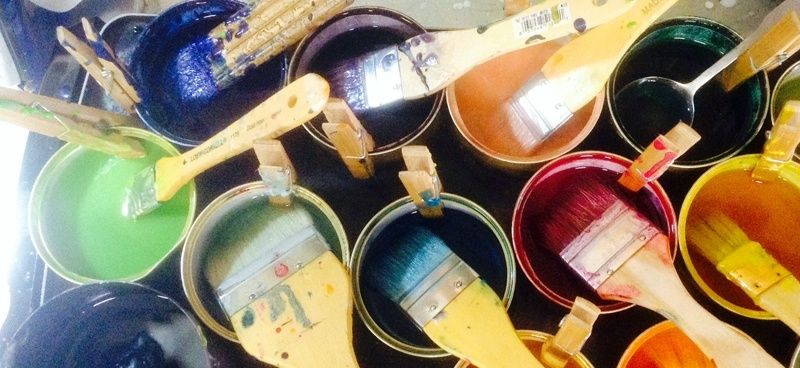
Optically, the medium behaves unlike a conventional drying paint. Light enters the semi-translucent wax, encounters suspended pigment and tiny variations in the fused surface, and returns with a softened, internally scattered glow. When an artist builds thin veils over denser passages, the result can resemble looking through amber, mist, or polished stone. Scraped areas may reveal earlier decisions, while raised edges catch light and create a quiet relief across the panel. A useful encyclopedic overview of encaustic painting explains the basic relationship between wax, resin, pigment, and heat.
| Material quality | Visual or structural effect |
|---|---|
| Beeswax | Translucency, body, moisture resistance, and a soft surface character |
| Damar resin | Greater hardness, a higher melting point, and increased gloss |
| Dry pigment | Colour density, chromatic variation, and layered optical depth |
| Heat fusion | Adhesion between strata and a unified, durable surface |
Compared with traditional oil paint, encaustic does not depend on oxidation and solvent evaporation to form its final film. It therefore avoids some of the yellowing and embrittlement associated with aging drying oils, although the entire artwork still depends on a sound support, appropriate preparation, and competent technique. Acrylic paint dries into a polymer film that can be highly stable, but encaustic offers a more mineral, tactile, and refractive presence. Its resilience should not be confused with invulnerability: poor adhesion, unstable panels, excessive heat, or incompatible mixed media can still create conservation problems. The strongest works are those in which material decisions and structural preparation are treated with equal seriousness.
Curatorial Standards for Display and Climate Control
In ordinary domestic conditions, encaustic paintings are considerably less delicate than their molten origin might suggest. Wax softens at approximately 150 to 160 degrees Fahrenheit, or about 65 to 71 degrees Celsius, temperatures far beyond a normally occupied room. Standard living areas, galleries, and bedrooms are therefore generally suitable. The more realistic risks involve localized heat and prolonged ultraviolet exposure, such as a painting placed above a radiator, beside a powerful heat source, inside a hot conservatory, or in a vehicle during summer.
Placement also affects the long-term appearance of the work. Direct sunlight can fade pigments and accelerate deterioration in wax or mixed-media components, while bathrooms and other persistently humid rooms may expose wood panels to unnecessary moisture movement. Normal seasonal variation is usually manageable, but thoughtful positioning remains an important part of responsible collecting. Select a location where the painting can be appreciated in changing light without receiving harsh, concentrated sun throughout the day.
- Keep the work away from radiators, fireplaces, heating vents, and intense artificial heat.
- Avoid direct sunlight and choose filtered or indirect illumination where possible.
- Do not display encaustic in bathrooms, damp storage areas, hot attics, or unventilated conservatories.
- Maintain ordinary indoor conditions, avoiding freezing temperatures and prolonged extreme heat.
- Use clean hands or white cotton gloves when moving the work, and support the panel securely from both sides.
- For transport, prevent bubble wrap from touching the painted face; use suitable release paper and professional art handling for valuable or large works.
Framing should preserve the character of the surface rather than conceal it. A float frame is often an elegant solution because it creates a narrow visual separation between the artwork and the frame, allowing texture and edges to remain visible. Glass or acrylic glazing is generally unnecessary for panel-based encaustic works and may interfere with the tactile reading of the surface. Works on paper can require different framing strategies, including glazing that does not touch the artwork. In every case, the artist’s or gallery’s specific instructions should take priority, particularly where encaustic is combined with paper, fabric, metal, or found objects.
Mastering the Ritual of Curing and Surface Buffing
During the first six to twelve months, an encaustic painting may continue to cure. One natural result is bloom, a harmless hazy or whitish appearance caused by wax components migrating toward the surface. Bloom is not evidence of failure, mould, or permanent clouding. As the work settles, the surface may become clearer and more transparent. The process is part of the medium’s gradual maturation, much as a newly finished piece of wood can develop a different depth of colour over time.
Once the artist has indicated that the surface is ready, gentle buffing can restore a restrained satin or high-gloss sheen. The treatment should be approached as maintenance, not polishing in the conventional household sense. Avoid abrasive products, household cleaners, rough cloths, and pressure that could disturb texture or embedded elements. Smooth areas may be buffed, but heavily textured passages, oil-painted sections, and fragile mixed-media components should generally be left untouched unless the artist or a conservator advises otherwise.
- Place the artwork securely on a clean, stable surface, or keep it safely mounted if the artist recommends in-place care.
- Use a clean, lint-free microfiber cloth, very soft cotton, or suitable nylon material.
- Test a small, inconspicuous smooth area before treating the visible surface.
- Move in small, gentle circular motions, allowing the cloth to glide rather than pressing into the wax.
- Stop immediately if texture shifts, pigment transfers, or a mixed-media element appears unstable.
- For damage, deep scratches, lifting, or uncertainty about the correct treatment, contact the artist or a qualified art conservator.
This modest ritual can become part of the relationship between collector and artwork. The surface invites attention not only through its image or composition but also through its material history: heat, gesture, layering, and time remain visibly present. Routine dusting with a soft brush or lint-free cloth is usually sufficient once the painting has cured, and fully established encaustic surfaces tend to repel dust. Such care is gentle, occasional, and proportionate to the value of the object.
Curating Tactile Elegance for Generations
Encaustic painting brings together qualities that are rarely found in one medium. It carries an ancient record of endurance, yet supports highly contemporary abstraction and material experimentation. Its beeswax foundation offers warmth and translucency, its resin contributes strength and sheen, and its fused layers create an optical depth that changes with the viewer’s position. Properly constructed and intelligently displayed, an encaustic work can be as confidently collected as an oil painting, while offering a more immediate encounter with surface and touch.
When selecting a piece, look closely at the support, the coherence of the layers, the quality of the framing, and the artist’s explanation of materials and care. Ask whether the work is intended for indoor display, whether it includes vulnerable mixed media, and what conditions the artist recommends. Choose a surface that responds meaningfully to the architecture around it, whether through quiet tonal veils, pronounced relief, or a luminous field that gathers the room’s changing light. With informed placement and occasional gentle maintenance, encaustic art can bring lasting tactile elegance, visual intrigue, and a distinctive sense of presence to a refined collection.